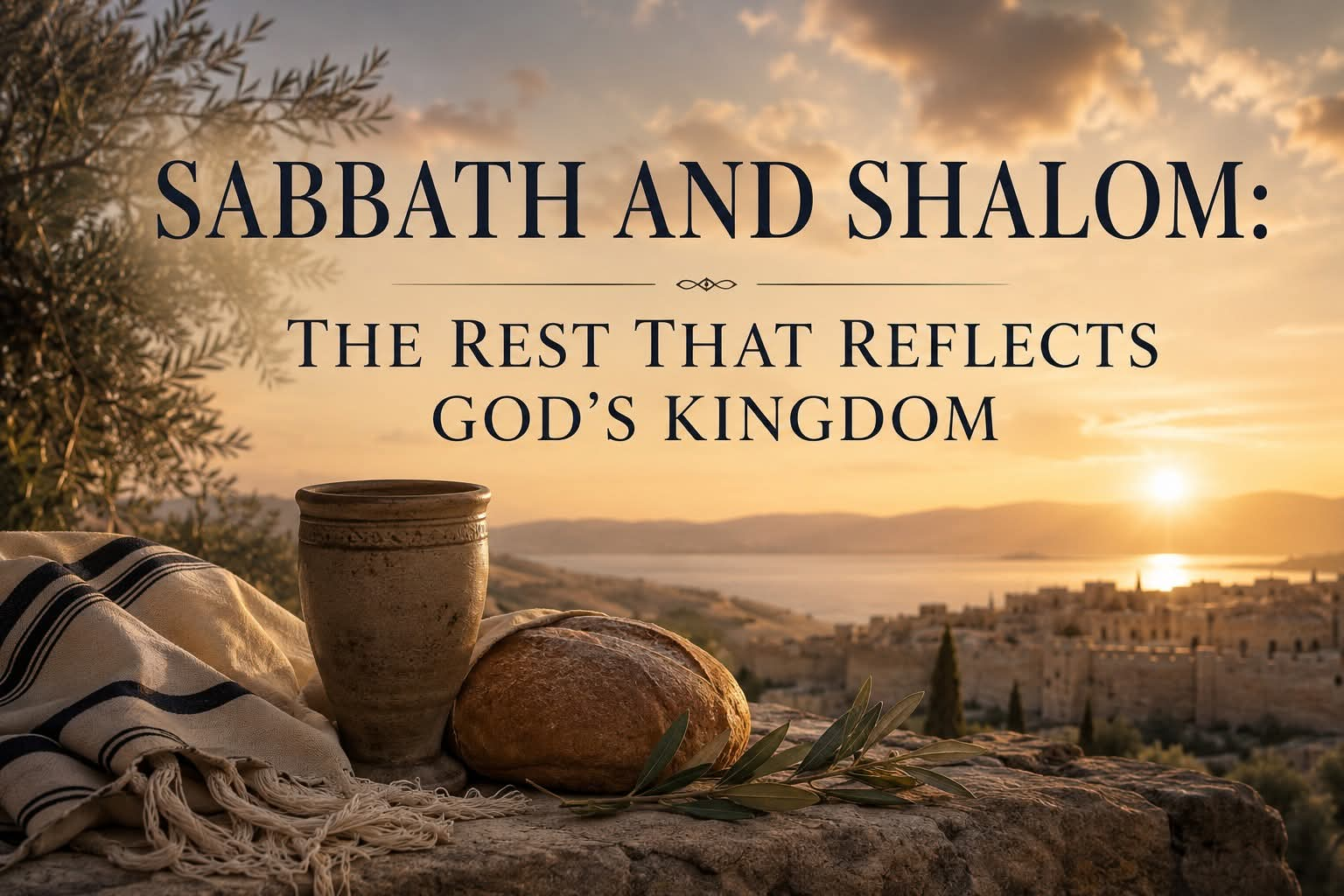
God’s KingdomWhen most people hear the word “Sabbath,” they think primarily of a day on the calendar. Yet in Scripture, Sabbath is far more than a scheduled pause from labor. It is a sign, a gift, and a foretaste of God’s kingdom. At its heart, Sabbath is inseparable from shalom—the Hebrew concept of wholeness, harmony, completeness, and peace. Shalom is not merely the absence of conflict; it is life ordered according to the goodness of God. The Sabbath invites humanity to enter that order.
The first Sabbath appears not at Sinai, but in creation itself. After six days of forming and filling the world, God ceased from His work and blessed the seventh day. The Creator was not exhausted. His rest was the declaration that creation was complete, good, and functioning according to His purpose. The seventh day stands as the crown of creation, a sanctuary in time where humanity is invited to enjoy fellowship with God and delight in His provision.
This connection between Sabbath and shalom becomes even clearer throughout the Torah. The Sabbath is repeatedly described as a sign between God and His people. It reminds Israel that they are not slaves. In Egypt, their value was measured by endless labor and production. In God’s kingdom, their value is rooted in covenant relationship. By resting, Israel publicly confessed that their survival did not depend solely on human effort. Their security came from the Lord.Shalom flows from that trust. Much of human anxiety arises from the fear that everything depends on us. We strive, accumulate, and worry because we fear lack, failure, or loss. The Sabbath interrupts that cycle. It declares that God is the sustainer of life. To cease from ordinary work is not laziness; it is an act of faith. It is a weekly rehearsal of dependence on the Creator.
The prophets later connected Sabbath observance with justice, mercy, and covenant faithfulness. When Israel ignored the Sabbath, they were not merely violating a ritual command. They were embracing a worldview of self-sufficiency and exploitation. The Sabbath was meant to create a society shaped by shalom—a society where servants rested, families gathered, the poor were remembered, and the land itself was given relief. True Sabbath cannot be separated from compassion and righteousness.In the days of Yeshua, the Sabbath had become a point of intense debate. Yet Yeshua did not abolish the Sabbath; He restored its purpose. He healed on the Sabbath, relieved suffering on the Sabbath, and taught that “the Sabbath was made for man, not man for the Sabbath.” His actions revealed that Sabbath is not a burden designed to crush humanity. It is a gift designed to restore humanity.
Yeshua embodies the deepest meaning of Sabbath and shalom. He invites the weary to come to Him for rest. This does not eliminate the rhythm of sacred time; rather, it reveals the goal toward which the Sabbath points. The weekly Sabbath becomes a signpost directing us to the greater rest found in the Messiah—the restoration of relationship with God and the healing of creation itself.
The New Testament speaks of a future “Sabbath rest” that remains for the people of God. The biblical story begins with rest in Eden and ends with the restoration of all things. The Sabbath is therefore both remembrance and anticipation. It remembers God’s finished work in creation and anticipates God’s finished work in redemption.Practically, embracing Sabbath and shalom means more than avoiding certain tasks for a day. It means learning to live from trust rather than striving. It means creating space for worship, fellowship, gratitude, and delight. It means allowing our homes, communities, and hearts to reflect the peace of God. The Sabbath asks a profound question every week: Do we believe that God is enough?
In a world driven by constant productivity, endless noise, and perpetual anxiety, the Sabbath remains a radical testimony. It proclaims that human beings are not machines, that life is more than labor, and that God desires His people to live in shalom. When we honor the Sabbath as a gift rather than a burden, we participate in a rhythm woven into creation itself. We taste, however briefly, the peace of the coming kingdom where all things will finally be made whole.That is the deeper beauty of Sabbath. It is not merely a command to stop working. It is an invitation to enter God’s shalom.
Leave a Reply